

If he has any anxiety as to how fickle dancehall fans will react to his new album, singjay Snow was not letting on when Splash caught up with him recently. The 32 year-old was more concerned about the sub-zero conditions he was chilling in in his native Ontario than the response to Two Hands Clapping, his comeback set.
‘Man, it’s freezing up here,’ said Snow during a phone link-up. Canada’s best-known dancehall export was in Kingston in November soaking up Jamaica’s more hospitable climes and dancehall vibe, but has been back in Maple Leaf land promoting Two Hands Clapping, which is being distributed in Canada, Japan and Europe by EMI/Virgin.
It is Snow’s first album since the little heard-of Mind On The Moon which was also distributed by Virgin. More significantly, it is five years since the release of Justuss, his third and final album for the Elektra Records affiliate, East West Records; that’s a long time to be away from the dancehall where trends change as quickly as the genre’s latest fashions.
Yet, Snow is not concerned. ‘I left on my own, it wasn’t like, ‘he’s no good no more’,’ he said. ‘I’m here still, working with the right people. It’s going to be easy.’
It hasn’t been easy on the personal front for the lanky Darren O’Brien (Snow’s given name) in the past three years. He says during that period he wallowed in drunkenness and was in and out of Toronto courts answering to a variety of charges that stemmed from his alcoholism.
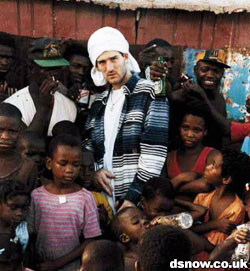 When an Irish kid from a rundown Toronto neighbourhood has the power to disrupt a giant beach party in Kingston, Jamaica with merely his presence, it’s fair to say he’s a legitimate star. That’s what happened to Darrin O’Brien, better known as Snow, on a trip to the sunny island late last summer. When the 32-year-old singer arrived at the Stone Love dance, news moved through the 2,000-plus revellers at light speed until the DJ was forced to stop the music and address Snow.
 Somehow it all seems to suggest things are more complex than they seem. Racial profiling, a season of street violence in Toronto, and the usual innuendoes that Jamaicans brandish the most weapons all become slightly more confusing for those seeking easy explanations. How? Just add Snow.